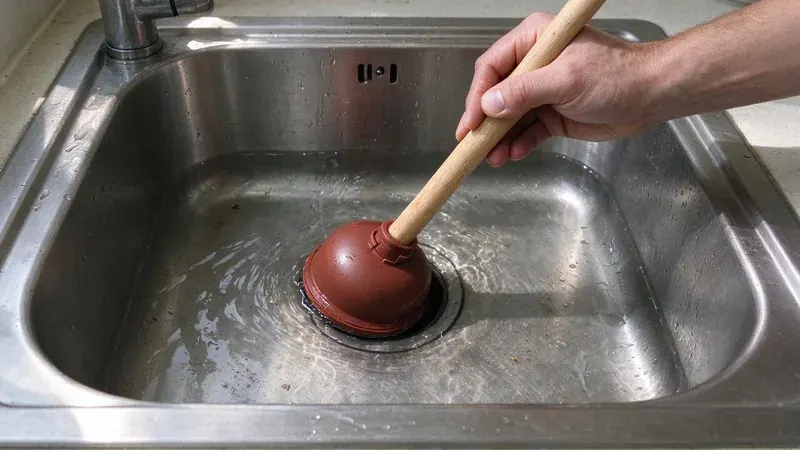
The kitchen sink works harder than any other drain in the house. It takes food scraps, cooking oil, coffee grounds, soap and dishwasher discharge every day, and it rarely gets attention until water stops draining. A kitchen backup is one of the most common plumbing calls in Nebraska homes, and most of them trace back to a handful of familiar causes. Understanding those causes makes it much easier to clear a clog safely and keep it from coming back.
What Causes Kitchen Sink Backups
Grease is the top culprit. Bacon fat, pan drippings and cooking oil go down the drain as liquid but cool and harden inside the trap and branch line. Eventually that fatty layer catches food particles and forms a thick, sticky blockage. Where the water is hard, calcium scale and soap residue bond with grease, producing a crust that hot water alone can't dissolve.
Most water in Nebraska comes from groundwater and tends to be hard, so scale builds up in water heaters and fixtures over time.
Garbage disposals are the second big factor. A disposal grinds food, but it does not make it disappear. Fibrous foods like celery, corn husks, artichokes and onion skins wrap around the impellers and form mats in the drain. Starchy foods like pasta, rice and potato peels swell and turn into paste. Coffee grounds and eggshells do not dissolve at all and settle in low spots like sand.
Other causes are less obvious. In older homes, cast iron or galvanized drain lines corrode and roughen on the inside, giving debris a place to snag. A clogged or improperly installed dishwasher drain can push water back into the sink. A blocked roof vent, sometimes from debris or a bird nest, slows drainage and leads to gurgling. When both basins of a double sink back up together, the clog is usually past the point where they join.
Quick Solutions You Can Try
For a slow or standing sink, start with the simple fixes before reaching for anything stronger:
- Check the disposal. Turn off power, then use the hex key on the bottom of the unit to free a jam and press the red reset button.
- Plunge with the other side sealed. On a double sink, plug the second drain with a stopper or wet rag so the plunger pressure is directed at the clog.
- Clean the P-trap. Place a bucket underneath, loosen the slip nuts and clear the curved trap by hand.
- Use a hand auger. A small drum auger can reach a few feet into the wall to break apart a grease plug.
- Run hot water and dish soap after clearing the clog to flush loosened grease further down the line.
Avoid chemical drain openers. Caustic and acid products generate heat that can soften PVC, damage disposal seals and eat into older metal pipes. They also create a danger for anyone who has to open the drain afterward. If the first round of plunging and trap cleaning does not work, the clog is likely in the branch line inside the wall, which needs a longer cable.
How to Prevent the Next Backup
Prevention depends on what goes into the drain. Pour cooled grease into a can or jar and throw it in the trash. Wipe greasy pans with a paper towel before washing. Scrape plates into the trash or compost, and use the disposal only for small soft scraps with plenty of cold water running. Cold water keeps fats solid so the disposal can chop them and push them along, while hot water melts them so they coat the pipe downstream.
Once a month, run a full sink of hot water and let it drain all at once to scour the trap. If you have a water softener, the reduced scale helps keep drain walls smoother. Homes with repeated backups often benefit from a professional drain cleaning every year or two, especially if the kitchen line is long or runs through an older cast iron stack.
When to Call a Professional
Call a plumber when the sink backs up again within days of clearing it, when water appears in another fixture as the sink drains, when you hear gurgling from the dishwasher or nearby toilets, or when the clog is beyond the reach of a hand auger. Those signs point to a deeper branch or main line problem. FKV Plumbing clears kitchen lines with professional cable machines and hydro jetting, and can run a camera to see what is actually inside the pipe. Call (402) 258-1639 and we will get your sink draining again. Most standard kitchen drain cleanings run about $150 to $350, with jetting priced higher for heavy grease.
Need a licensed plumber in Nebraska?
FKV Plumbing answers 24/7 and offers same-day service across Nebraska.